ServicesGrading
Grading in Simpsonville
Good grading is the part of a build nobody admires and everybody depends on. We shape your lot so the foundation sits on firm, level ground and rainwater moves away from the house instead of toward it. We explain each step in plain English before any soil moves.
What grading does and when you need it
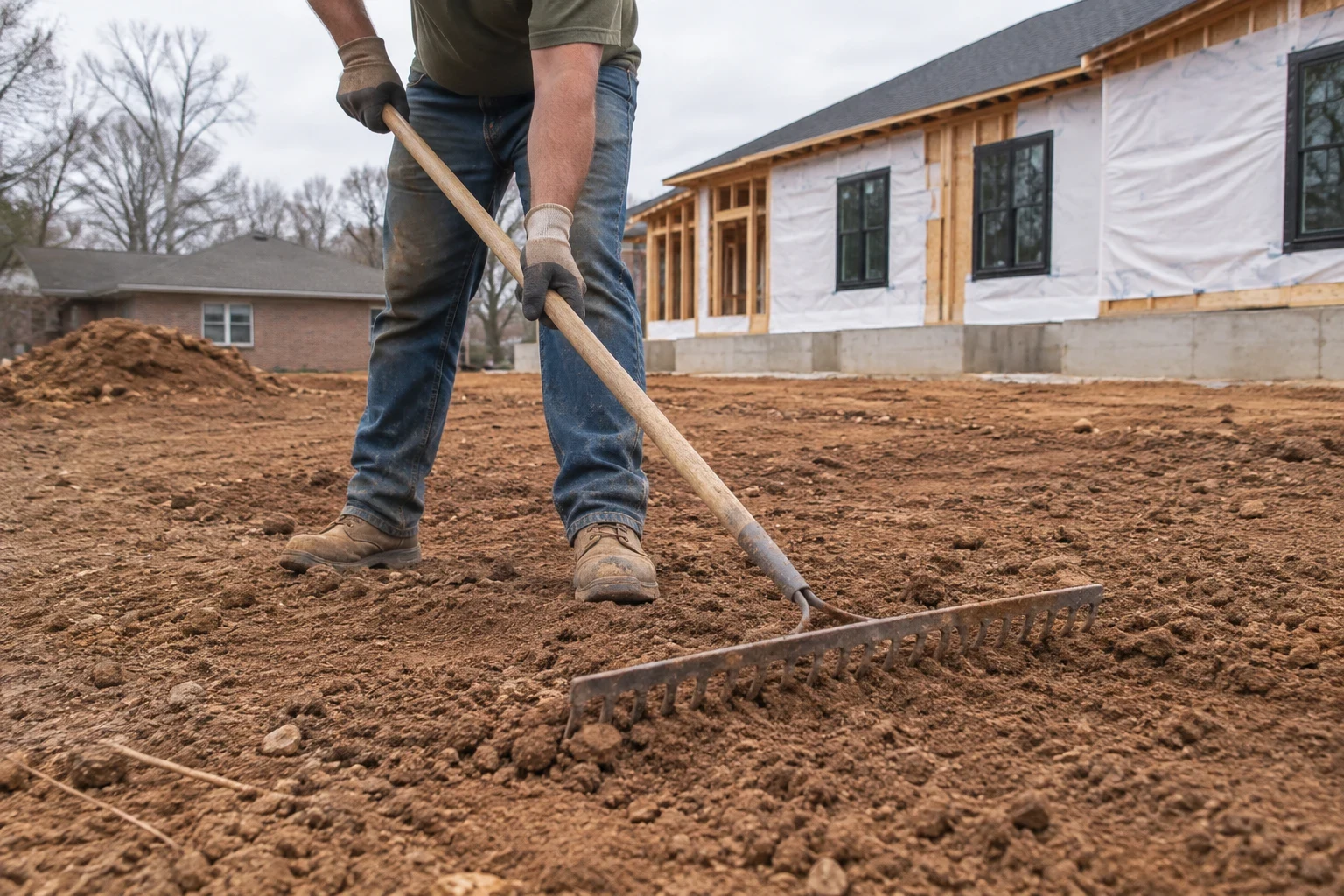
Grading means moving and compacting soil to set the slope of your land. On a new lot it creates a flat, stable pad for the foundation and a gentle fall away from it. On an existing property it fixes low spots, soggy corners and slopes that send water toward the house.
Most grading jobs come in two stages. Rough grading happens before or right after the foundation goes in and sets the overall shape. Final grading comes near the end of a build or landscape project and smooths the surface so it is ready for sod, seed or a driveway.
Our red clay holds its shape well when it is compacted right, but it sheds water fast and turns slick and soft when it is worked wet. That is why we pay close attention to slope, compaction and timing. If your lot still has trees and brush, our land clearing work usually comes first.
What our grading work includes
- A walk of the lot
- We look at where water comes from, where it goes now and where it needs to go. We point out high and low spots and anything that affects the plan, like a neighbor's runoff or an existing drainage path.
- Building pad preparation
- For a new custom home, we cut and fill to create a level pad at the right height. Fill soil goes down in layers and gets compacted so the foundation is not sitting on loose dirt that settles later.
- Slope away from the foundation
- We set the ground to fall away from the house on every side. A common target is about six inches of drop over the first ten feet, though your lot and plans decide the final numbers.
- Swales and drainage paths
- Where water needs a route, we shape shallow swales to carry it around the house and off the lot in a controlled way. This keeps runoff from cutting ruts or pooling against walls.
- Final grade and cleanup
- We smooth the surface, remove rocks and debris, and leave the ground ready for topsoil, seed, sod or paving. Equipment paths get repaired before we leave.
Signs your property needs grading
Water standing after rain
Puddles that sit for a day or more after a storm mean the ground is flat or sloped the wrong way. Standing water near the house is the one to deal with first.
Damp crawl space or basement
Moisture, musty smells or water lines inside a crawl space often trace back to soil sloping toward the foundation. Fixing the grade outside is usually the first, simplest step.
Washouts and bare channels
Clay that is carved into ruts or gullies shows where water is running too fast. Left alone, those channels get deeper every storm season.
Soil settled against the house
Over the years, backfill around a foundation sinks and creates a moat that holds water. Regrading that strip can make a real difference.
A new build or addition coming up
If you are planning a custom home or a large addition, the site needs a pad and a drainage plan before the foundation goes in. Getting grading right up front costs less than correcting it after.
What affects the cost of grading
Grading is priced by the job, not by a flat rate, because no two lots are shaped the same. The biggest drivers are how much soil has to move and how easy it is to reach. We go over each line of the estimate with you so nothing comes as a surprise.
Size and amount of soil moved
A small regrade along one side of a house is a very different job from preparing a full building pad. The volume of cut and fill sets most of the cost.
Bringing in or hauling off soil
If your lot needs more dirt than it has, fill has to be delivered. If it has too much, the extra has to be hauled away. Either one adds trucking time.
Access and existing features
Tight side yards, fences, mature trees you want to keep and steep slopes slow equipment down or call for smaller machines.
Soil and site condition
Wet clay, buried rock or old debris can change how the work goes. We flag anything we see during the site visit before you commit.
Permits and erosion control
Larger projects may need a permit plus silt fence or other measures to keep soil on your property. We include those in the estimate when they apply.
How a grading job runs
- 1
Consultation and site visit
We start with a phone conversation about your project, then walk the property with you. We tell you what we see and what we would recommend, in everyday terms.
- 2
A written plan and estimate
You get a line-item estimate that spells out the work, any imported soil or haul-off, and what the finished slope will look like. If the job disturbs enough ground to need a county land disturbance permit, we explain that and handle the paperwork.
- 3
Marking and protection
Before equipment arrives, we have underground utilities marked and set up silt fence or other erosion control where it is needed. We also agree on how equipment will get in so your driveway and lawn take as little wear as possible.
- 4
Cutting, building up and compacting
We move soil to the planned elevations, spread new soil in thin layers and compact each one before the next goes down. We watch the weather closely, because working clay right after a heavy rain leads to soft spots.
- 5
Final check with you
Once the grade is set, we walk it together and show you where water will flow. Then we clean up and leave the site ready for the next stage.
Grading questions we hear often
What is the difference between rough grading and final grading?
Rough grading sets the overall shape of the land and the height of the building pad. Final grading happens later and smooths the surface so it drains well and is ready for grass or paving. On a new build, there are often weeks or months between the two.
Can you fix drainage on a yard that has been graded before?
Yes. Plenty of older properties have settled soil or slopes that were never quite right. We can regrade the problem areas and add swales where water needs a path, often without touching the rest of the yard.
Will grading tear up my whole lawn?
Only the areas we regrade get disturbed. We plan equipment routes ahead of time and repair them at the end. Any bare soil will need seed or sod afterward, and we can talk through the timing for that.
How long does grading take?
A small residential regrade can take a day or two. A full building pad takes longer, depending on soil volume and weather. Rain is the main thing that pushes dates, since working wet clay leads to poor compaction.
Do I need grading before you pour a foundation?
Almost always. The foundation needs a level, compacted base at the right height, and the ground around it needs to slope away. We coordinate grading with our foundation work so the two line up.
Let's look at how water moves on your lot
Tell us what you are seeing or what you are planning to build. We will walk you through your options in plain terms and lay out the next steps.