ServicesSiding Installation
Siding Installation in Simpsonville
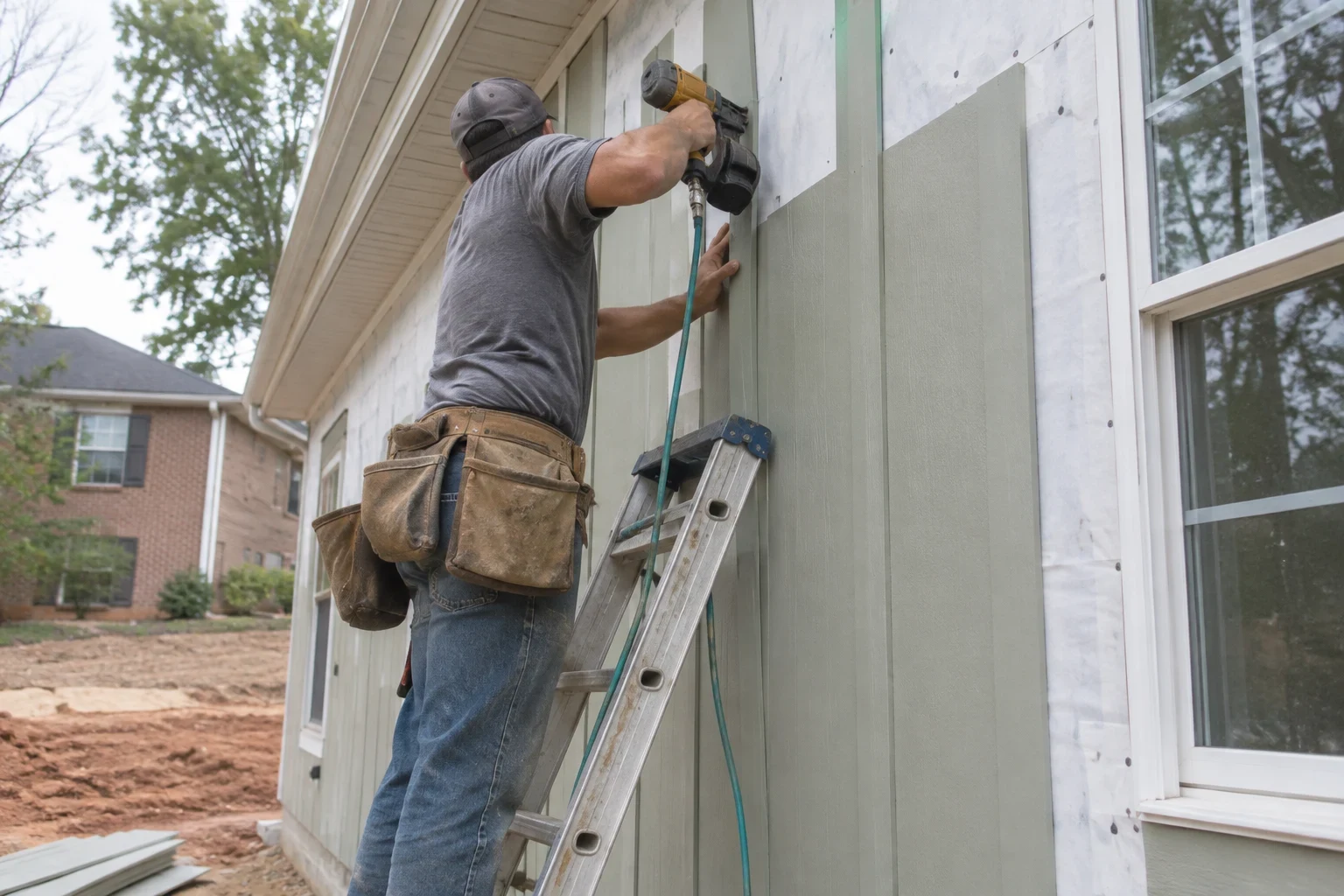
New siding should do two jobs: look good from the street and keep water out of your walls. We help you compare materials in plain terms, check what is underneath the old siding, and install the new layer with the wrap and flashing that make it last.
What New Siding Actually Does for Your Home
Siding is the outer skin of your walls. Behind it sits a weather barrier, and behind that, the sheathing and framing that hold your house up. When siding fails, the real damage usually happens in those hidden layers, which is why we treat a siding job as a wall job, not just a color change.
Most homeowners come to us choosing among three families of material. Vinyl is the lightest on the budget and needs little upkeep, but it can sag or warp near grills and in strong reflected sunlight. Fiber cement is heavier and holds paint well, and it stands up to moisture and insects. Engineered wood gives a real wood look with less weight than fiber cement, as long as it is sealed and kept clear of the ground.
We walk you through how each one behaves on your house, with your budget and how long you plan to stay. No pressure toward the priciest option. Siding is also a common part of our home remodeling and custom home building work, so we know how it ties into windows, trim and rooflines.
What Our Siding Installation Includes
Careful tear-off
We remove the old siding and haul it away. It's the only way to see the condition of the sheathing behind it.
Sheathing check and repair
Soft, stained or rotted sheathing gets cut out and replaced before anything new goes on. We show you photos of what we found so you can see why.
House wrap and flashing
A continuous weather barrier goes on first, lapped so water runs down and out. Windows, doors and the joints where walls meet the roof get proper flashing, which is where most leaks start.
Installation to the maker's specs
Each material has its own rules for nailing, gaps and clearances. Vinyl has to hang loose enough to expand in summer heat, and fiber cement needs set gaps from the roof and ground.
Trim, soffit and corners
We finish the corners, window surrounds and soffits so the whole exterior looks like one job, not a patchwork.
Daily cleanup
We sweep for nails and pick up scraps each day, and we protect your landscaping beds while we work.
Signs It's Time to Replace Your Siding
Boards that are warped or loose
Siding that bows, rattles in the wind or pulls away at the seams is no longer shedding water the way it should.
Soft spots or rot
Press on the lower courses and around windows. If the board gives or crumbles, moisture has likely reached the wall behind it.
Mildew that keeps coming back
In our humid summers some green growth on shady walls is normal. If it returns right after washing, or shows up inside on the same wall, water may be trapped behind the siding.
Peeling paint inside
Bubbling paint or stained drywall on exterior walls can point to a failed weather barrier, not just an interior problem.
Cracks, holes or hail damage
Split boards and holes let water and insects in. A few can be patched, but widespread damage usually means replacement makes more sense.
How a Siding Project Runs
- 1
Consultation and walk-around
We look at every wall, check suspect spots, and talk through materials, colors and how you use your home. You get a straight answer on whether repair or full replacement is the better call.
- 2
Written estimate
Your estimate lists the material, the square footage, trim work and an allowance for sheathing repair, so you know where the money goes before you decide.
- 3
Prep and tear-off
We protect plants, AC units and walkways, then remove the old siding one section at a time so your walls are never left open overnight in bad weather.
- 4
Wrap, flash and install
Damaged sheathing is replaced, the weather barrier and flashing go on, and then the new siding and trim are installed and checked course by course.
- 5
Final walk-through
We walk the house with you, point out any details you asked about, and leave the yard clean.
What Shapes the Cost of New Siding
Siding is priced mostly by wall area and material, but a few other things can move the number up or down. We spell each one out in your estimate so nothing comes as a surprise later.
- Material choice
- Vinyl generally costs the least to buy and install. Fiber cement and engineered wood cost more for both material and labor because they are heavier and need painting or careful finishing.
- Size and shape of the house
- More wall area means more material. Gables, dormers and lots of corners add cutting time and trim.
- What's behind the old siding
- Rotted sheathing or framing has to be fixed first. We can't know the full extent until tear-off, so we explain up front how any repairs will be priced.
- Height and access
- Two-story walls, steep slopes and tight side yards call for more scaffolding or lift time.
- Windows and trim details
- Many windows and doors mean more flashing and trim work around each opening.
Siding Questions We Hear Often
Something not covered here? (864) 581-2468
Can you put new siding right over my old siding?
Sometimes it's possible, but we rarely recommend it. Covering old siding hides any rot or moisture problems and can make windows and trim look recessed. Tearing off lets us check the sheathing and install a proper weather barrier.
Which siding holds up best in our humid summers?
Fiber cement handles moisture and insects very well. Vinyl doesn't rot, but it relies on the wrap behind it to stay dry. Engineered wood performs well when it's sealed and kept clear of soil. We'll explain the trade-offs for your house specifically.
How long does a siding job take?
An average single-story house often takes about a week once materials arrive, and larger or two-story homes take longer. Rain days and sheathing repairs can add time. We give you a realistic schedule during your consultation.
Do I need to be home while you work?
No. We'll want access to outdoor outlets and a clear path around the house. It helps to move patio furniture and anything hanging on exterior walls before we start.
Will you match siding on a new addition to my existing house?
We'll do our best to find the closest profile and color available. If an exact match no longer exists, we'll show you options, including re-siding one full side so the difference isn't noticeable.
Ready to Talk About New Siding?
Tell us about your house and what's bothering you about the exterior. We'll come take a look, explain your options in plain terms and give you a written estimate.