ServicesLand Clearing
Land Clearing in Simpsonville
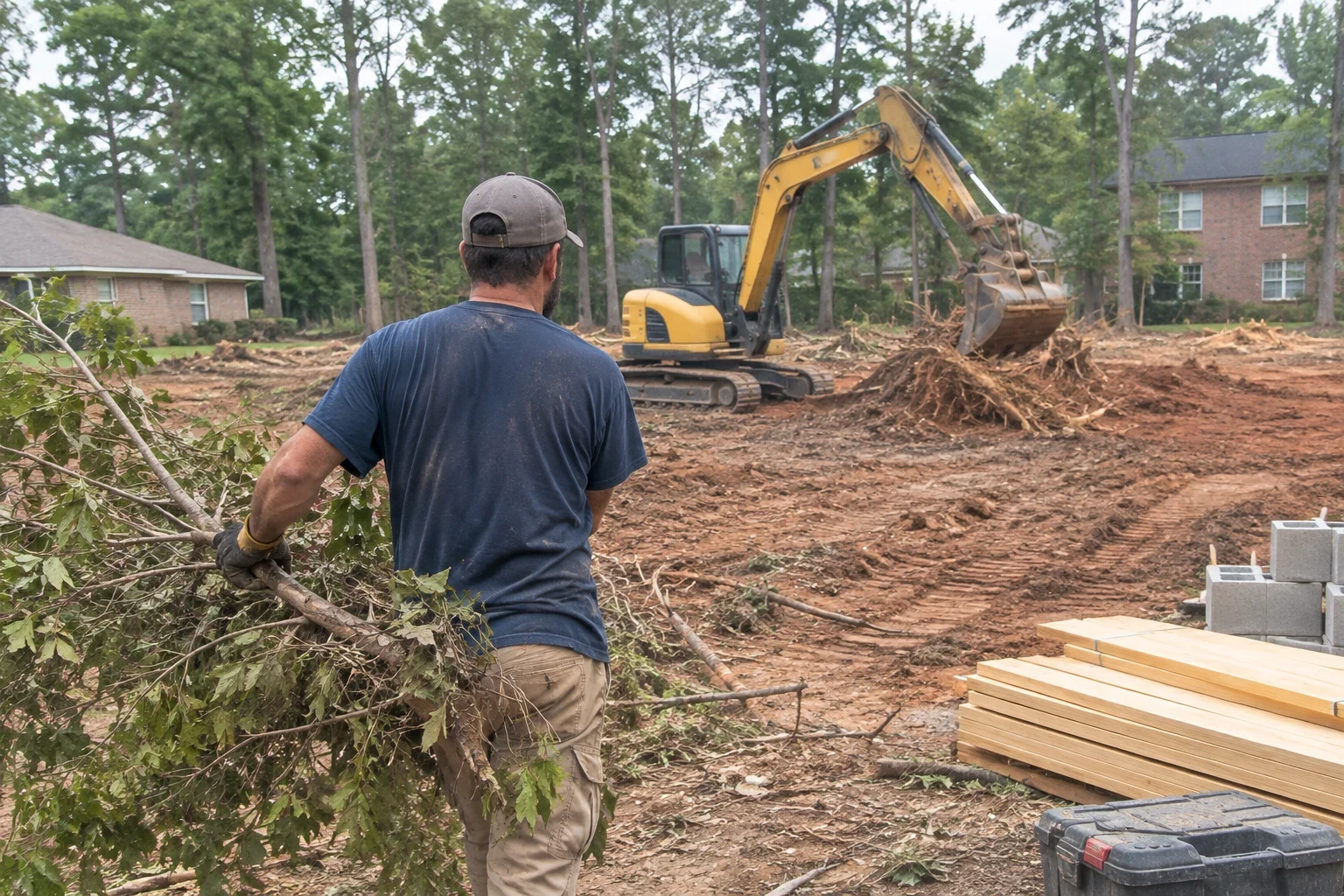
Before anything gets built, the ground has to be open and clean. We take out the trees, stumps and brush you want gone, keep the ones you want saved, and leave a lot that is ready for grading and a foundation.
What land clearing means for your lot
Land clearing is the first physical step of a build. It means removing what stands in the way of the house, the driveway and the work area around them. That covers trees, stumps and roots, brush and old debris. A cleared footprint is not the same as a bare lot, and most of our customers want to keep some of their trees.
Stumps and roots matter more than people expect. If they stay in the ground under a slab or a driveway, they rot over time and leave soft spots that can settle. That is why we pull them out, a step called grubbing, wherever something will be built.
We explain each choice in plain terms before work starts, so you know what is coming down, what stays and what happens to the debris. If your project is a new custom home, clearing usually leads straight into our grading and foundation work.
What the work includes
- Walking the lot with you
- We walk the property with you and flag the trees you want kept. We also mark the house footprint, driveway path and room for equipment to move.
- Tree removal
- Trees inside the build area come down in a controlled way, away from anything you want protected. Larger trees near a property line or an existing structure take extra care, and we plan those cuts first.
- Stump and root grubbing
- We pull stumps and the main root mass from the footprint and driveway. The holes are backfilled so the ground is ready for grading.
- Brush and undergrowth
- Thick vines, saplings and brush get cleared from the work area. This also opens up sight lines so you can finally see how the lot lays.
- Debris handling
- Most debris gets chipped or hauled off. Burning is limited by local rules, so we tell you up front which option fits your lot.
- Protecting the trees you keep
- We keep equipment off the root zones of trees you are saving where we can. Heavy machines packing the soil over roots is one of the common reasons a kept tree declines a few years later.
Signs your lot needs clearing first
You cannot see the ground
If the lot is covered in brush or young pines, nobody can judge the slope, drainage or where the house should sit. Clearing comes before any honest site plan.
Trees stand where the house will go
Even one large tree in the footprint has to come out along with its stump and roots before a foundation can be poured.
There is no way in for equipment
Concrete trucks and framing deliveries need a solid path. If there is no driveway route yet, it has to be cleared and opened.
Old debris is buried or scattered
Rotting stumps, old fencing or dumped material on the lot can cause problems under a slab. It is better found and removed now than discovered later.
Dead or leaning trees near the build
A tree that is failing next to your future home is a risk you do not need. We point those out during the walk-through.
What moves the cost of land clearing
Every lot is different, so we price clearing after we have seen it. We give you a written estimate with the work broken into clear parts. If something unexpected turns up in the ground, we talk with you before doing extra work.
How much area is cleared
A house footprint and driveway cost less than clearing a whole parcel edge to edge.
Tree size and density
Large hardwoods take more time and heavier equipment than young pines and brush. Trees near structures or lines need careful cuts.
Stumps and what is underground
The number of stumps to grub, plus any buried debris or rock, affects time and hauling.
Debris disposal
Chipping on site, hauling off or a mix of both each carry different costs. Haul distance and volume matter too.
Access, slope and permits
A tight entry or steep ground slows the work. Erosion control and any required permits are part of the price as well.
How a clearing job runs
- 1
Consultation and walk-through
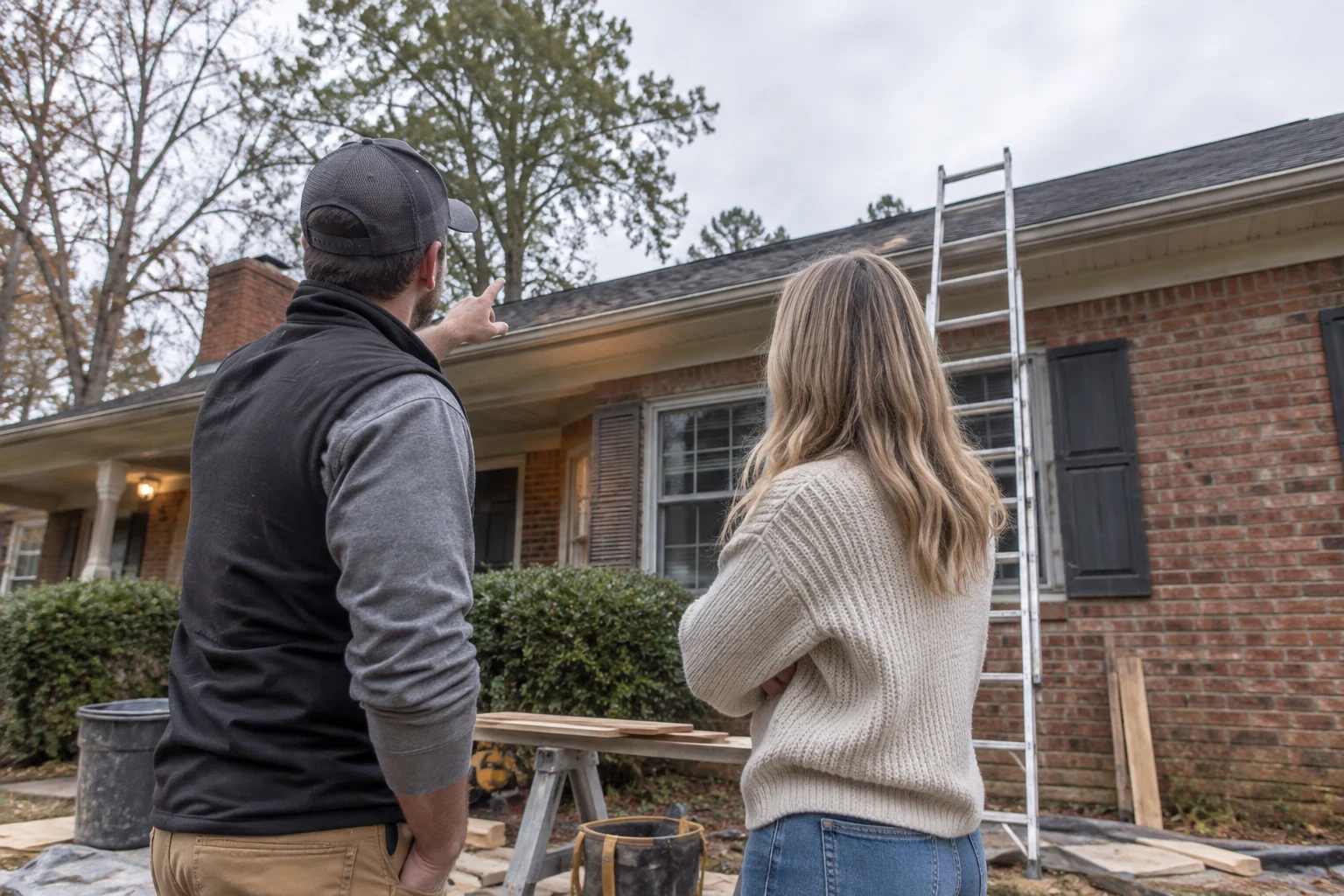
We talk through your plans by phone, then walk the lot with you. We mark keep-trees, the footprint and the access route.
- 2
Utilities and boundaries
Before any digging, underground utilities are located through the 811 service. We confirm where your property lines are so nothing on a neighbor's side gets touched.
- 3
Erosion control
Bare ground washes when it rains, and clay soil runs off fast. We set silt fence or other measures where runoff could leave the lot, and larger cleared areas can call for a stormwater permit.
- 4
Cutting, grubbing and hauling
Trees come down, stumps come out and debris is chipped or hauled. Work usually goes in sections so the lot stays organized.
- 5
Final look together
We walk the cleared lot with you and confirm it matches what was agreed. From there it is ready for grading.
Land clearing questions
Can I keep some of my trees?
Yes, and most people do. We mark the trees you want to save during the walk-through and work around them. We will also tell you honestly if a tree is too close to the footprint to survive construction.
Do you remove the stumps or just cut them flat?
Anywhere the house, driveway or patio will go, we pull the stumps and main roots. Stumps left under a structure rot and can cause settling. In areas that will stay natural, cutting low is often fine.
What happens to all the wood and brush?
It is usually chipped or hauled away. Burning is restricted in many places, so it is rarely the default. We can sometimes leave chips or firewood for you if you want them.
Do I need a permit to clear my lot?
It depends on how much ground is disturbed and where the lot sits. Larger areas can require a stormwater or land disturbance permit. We look at your lot and tell you what applies before work begins.
How long does land clearing take?
A typical home lot takes days, not weeks, but size, tree count and weather all play a part. Heavy rain can pause work because wet clay is hard on equipment and on the soil. We give you a realistic timeline after the walk-through.
What comes after clearing?
Usually grading, which shapes the ground so water drains away from the house. Then comes foundation work. We can handle each step, so the lot does not sit between crews.
Ready to see your lot opened up
Tell us about your land and what you hope to build. We will walk you through what clearing involves and what to expect next, in plain terms.